
Remember the First TV in the House?
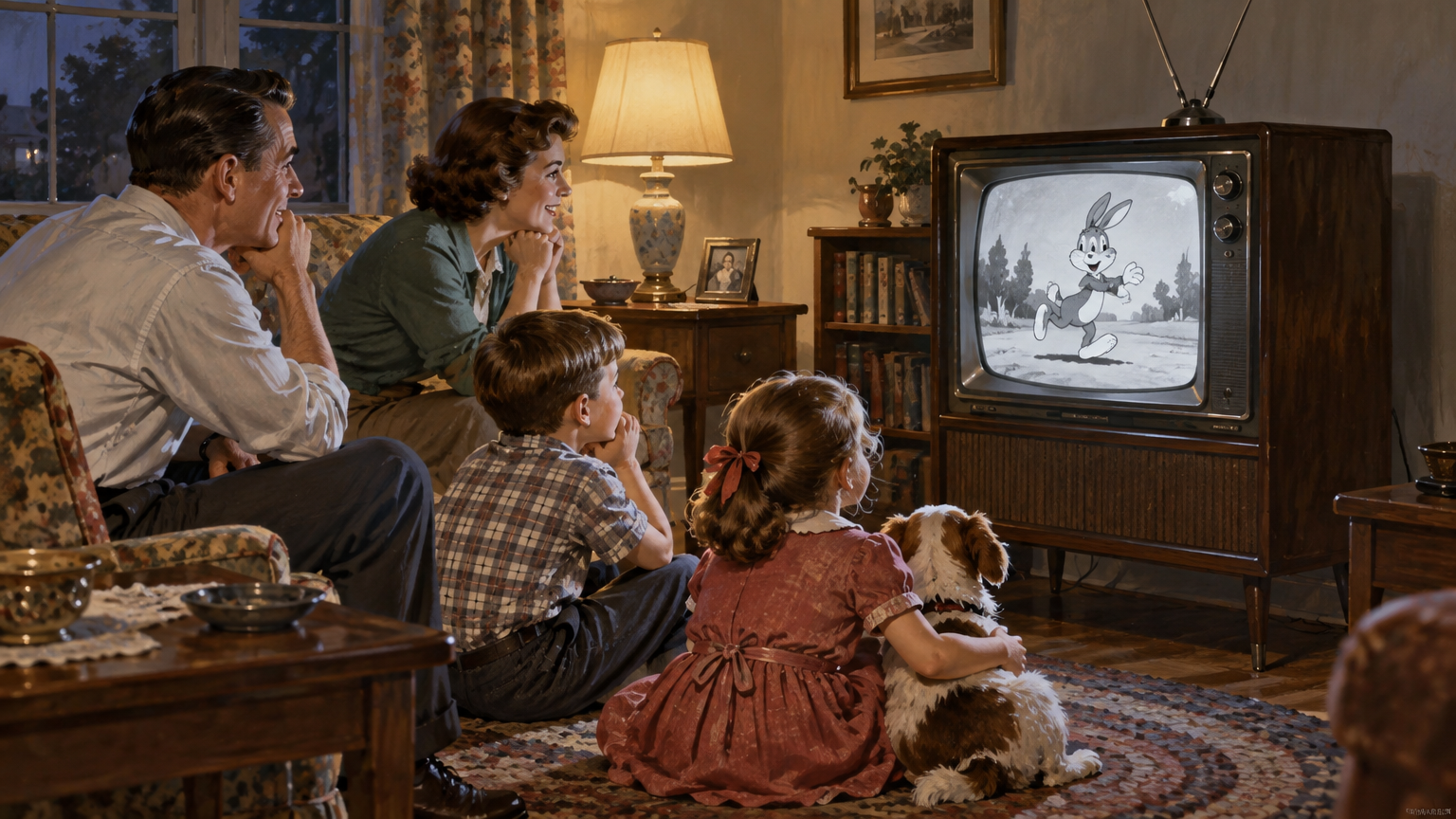
Remember when a picture did not need color to seem wonderful?
If your family’s first television showed everything in black and white, what comes to mind first? The picture itself? The place where the set stood? Or the people you watched it with?
Those questions invite a different kind of history. There is the history of how television worked, and there is the meaning a household gave it. The first can be traced through dates and inventions. The second belongs to the people who were there. Your memories deserve room without someone filling in the details for you.
For this Saturday Morning Cartoons visit, let’s begin with that black-and-white picture. It was not really just two colors. It showed shades of gray, using light and dark to form the image. There was a great deal of work behind something as simple as sitting down to watch.
Before Color Took Over
In the United States, a group called the National Television Systems Committee worked out a single standard for television broadcasts in 1941. That meant a shared set of rules for sending pictures to television sets.
World War II slowed the path forward. Much of the work on electronics for home use stopped during the war. American television broadcasting then began to grow in the years right after it.
That places the black-and-white set in an important part of the story. During the 1950s and 1960s, television was moving toward color, but the change did not happen all at once.
Here is a detail that may surprise you: the United States adopted its NTSC color standard in 1953. Some color programs became available soon afterward. Yet color sets did not outsell black-and-white sets in North America until the early 1970s.
That is a long stretch between a new idea becoming available and that idea taking the lead in sales. The arrival of color did not mean black and white packed its bags the next morning.
There was also a thoughtful piece of engineering behind the change. The new color system worked with the older black-and-white system. A black-and-white set could use the brightness part of the broadcast to show its picture. A color set could also read the added color information.
In plain words, the new signal did not leave the old set behind.
That detail matters. It helps explain how black-and-white television could remain part of the story even as color broadcasting began.
More Than the Picture
If you remember sharing one of those sets, think for a moment about what made that time worth keeping. Was it only what appeared on the screen? Or did watching together give an ordinary part of the day a little more meaning?
We do not have to claim that every family gathered happily, or that every home had the same experience. The past was not perfect. A television could provide a picture; it could not promise a close family.
Still, shared entertainment can give people something to enjoy together. A laugh is a small thing, but sharing it can matter.
The technology kept changing. Around 2006, broadcasters began moving from older analog color systems toward sharper digital television, though the timing differed from country to country. The black-and-white picture belonged to an earlier stage of a much longer journey.
But a clearer picture is not the same thing as a more treasured memory.
Maybe your first television brings back something dear. Maybe it does not. Either way, there is a gentle question worth carrying into today: What might we enjoy with someone else, rather than enjoy alone?
We cannot bring back an earlier decade. We can still make room for shared time.
A Final Thought
A picture does not have to be in color to belong to a treasured memory. If thinking about that first television brings someone to mind, let the memory turn your attention toward the people in your life today. We cannot replay the years, but we can still choose to spend a little time together.
Historical Sources
Do You Remember?
What do you remember about those days? Share your memories with us!