
The Anchor I Forgot to Tie Off
By Joseph Cutler ·
Responsibility is not just about what we ask others to do. It is about making sure we have done what we were supposed to do first. And when we fail, the most healing words we can offer are not excuses, explanations, or blame. Sometimes the most powerful words are simply, “I was wrong. Please forgive me.”
Years ago, I had a little fishing boat.
It was nothing fancy. Just a 16-foot flats boat with a small 25-horsepower engine on the back. But to me, it was enough. It could get me where I wanted to go, and it gave me a lot of good memories on the water.
Sometimes I would go fishing by myself. Other times I would take one of my children with me.
One day, I took my son Amick out fishing.
We headed out toward the flats, just a little ways into the ocean. It was still close enough and shallow enough that I felt comfortable, but far enough out to feel like an adventure. The water was calm, the day was open, and we were ready to fish.
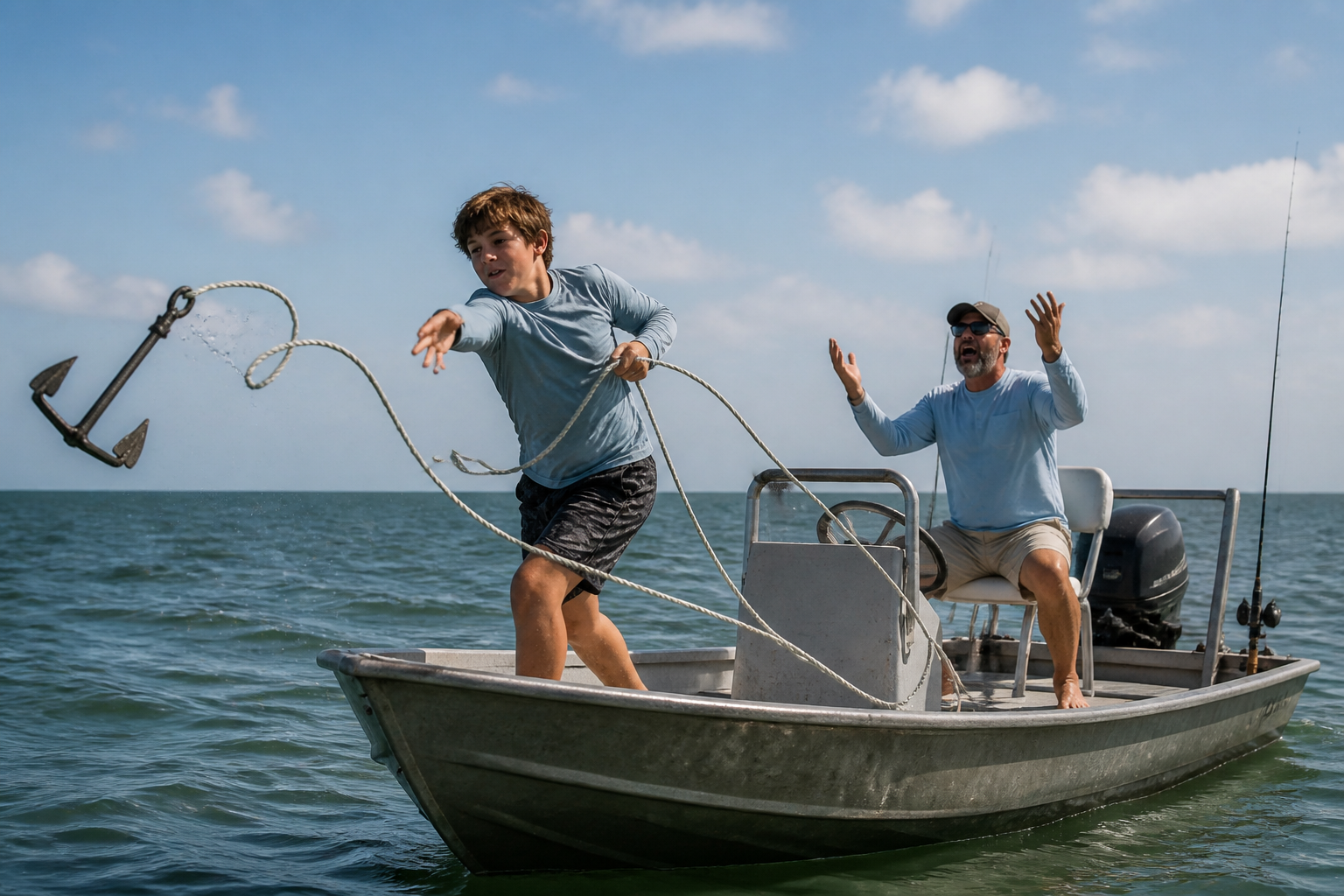
When we got to the spot, I asked Amick to drop the anchor.
Now normally, the anchor was kept in the front storage area with the rope. I expected him to pull it out, throw the anchor overboard, and let us settle in.
So that’s what he did.
He threw the anchor out.
But there was one problem.
The rope was not tied off to the boat.
So when the anchor went over, the rope went with it.
The anchor sank to the bottom, the rope followed it, and there we were, sitting in the boat with no anchor.
And I wish I could tell you I handled that moment with patience and grace.
But I didn’t.
I got onto him.
I probably raised my voice. I probably asked him why he didn’t tie it off. I probably made him feel like he had done something careless, when the truth was, the responsibility was never his to begin with.
It was mine.
I was the dad.
I was the captain of the boat.
I was the one who should have made sure the anchor was tied before I asked my son to throw it overboard.
But instead of accepting responsibility, I shifted the blame.
That moment has stayed with me for years.
Not because of the anchor.
Not because of the rope.
Not because of the fishing trip.
It stayed with me because I remember how quiet Amick got afterward.
What should have been a good day together on the water became heavy. The joy drained out of the moment. The fishing trip was spoiled, not because my son lost the anchor, but because his dad lost his patience.
And that is a hard thing to admit.
Sometimes in life, we blame other people for things we should have taken care of ourselves.
We blame our children for not knowing what we never taught them.
We blame our spouse for not understanding what we never explained.
We blame our friends for dropping something we never secured.
We blame others for outcomes that began with our own oversight.
That day, Amick only did what I asked him to do.
I told him to drop the anchor.
He dropped the anchor.
But I had not done my part first.
There is a lesson in that little boat that I have never forgotten.
Before we blame someone else, we need to ask ourselves, “Was this really their responsibility, or was it mine?”
That question could save a lot of relationships.
That question could soften a lot of conversations.
That question could stop us from wounding someone who was simply trying to help.
The older I get, the more I realize that being right is not nearly as important as being humble. Pride always wants to protect itself. Pride wants someone else to carry the blame. Pride says, “You should have known better.”
But humility says, “I should have handled that better.”
And that is where healing begins.
There are moments in life we cannot go back and redo. I cannot go back to that boat. I cannot pull that anchor back before it sinks. I cannot take back the first words that came out of my mouth that day.
But I can own it now.
And if Amick ever reads this, I want him to know something from my heart.
Son, I am sorry.
I was wrong for getting onto you that day.
It was not your fault.
It was mine.
I should have tied off the anchor before I ever asked you to drop it. I should have protected the moment instead of ruining it. I should have chosen patience instead of blame.
I hope you forgive me.
Life has a way of teaching us through small moments that become big memories.
A lost anchor became a lesson about responsibility.
A quiet son became a reminder that our words have weight.
A spoiled fishing trip became a mirror that showed me something in myself I needed to change.
And maybe that is one of the great lessons of life.
Before we throw the anchor, make sure it is tied off.
Before we blame someone else, make sure we have done our part.
Before we speak in frustration, remember that the person in front of us may carry those words much longer than we realize.
Because sometimes the thing that sinks the deepest is not the anchor.
Sometimes it is the hurt we caused when we refused to take responsibility.
My Final Thought
The anchor that day may have been lost in the water, but the lesson has stayed with me for years. Responsibility is not just about what we ask others to do. It is about making sure we have done what we were supposed to do first. And when we fail, the most healing words we can offer are not excuses, explanations, or blame. Sometimes the most powerful words are simply, “I was wrong. Please forgive me.”